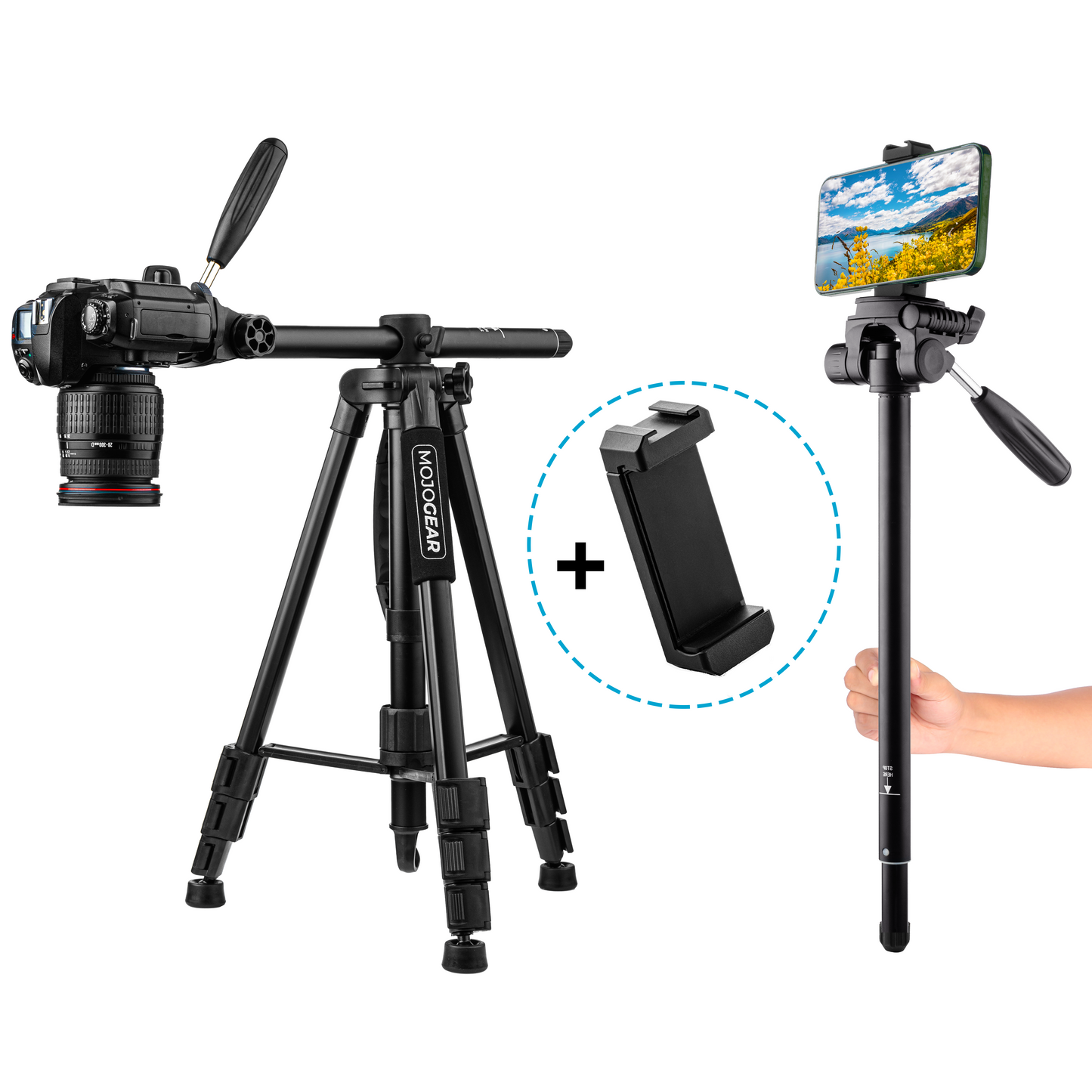
The Art of Tripods: Achieving Stability in Your Creative Shots
In the realm of photography and videography, the art of tripods plays a crucial role in achieving stability and precision in your creative shots. A tripod not only eliminates camera shake but also allows for greater compositional control, enabling you to experiment with different angles and perspectives. Whether you're capturing landscapes, portraits, or even time-lapse videos, using a tripod can enhance the overall quality of your work. By securing your camera, you can focus on other elements of your shoot, such as lighting and framing, without the constant worry of blurriness or unintentional movements.
There are several types of tripods available, each suited for various shooting conditions. For instance, a travel tripod is designed to be lightweight and compact, perfect for photographers on the go, while a studio tripod offers sturdiness for indoor shoots. Additionally, consider using accessories like tripod heads, which can provide fluid movement and even more versatile positioning. Mastering the art of tripods not only improves your photographic skills but also elevates your creative vision, allowing for more inventive storytelling through your images.
Counter-Strike is a highly popular tactical first-person shooter game that emphasizes teamwork and strategy. Players can choose to play as terrorists or counter-terrorists, engaging in various game modes that often involve bomb defusal or hostage rescue. If you're looking for a way to capture your gameplay, check out the Top 10 iphone tripods to enhance your streaming experience.
Balance in Motion: How Tripods Enhance Your Photography Experience
In the world of photography, achieving balance in motion is crucial for capturing stunning images. A tripod serves as an essential tool that enhances your photography experience by providing stability and support. Whether you're shooting landscapes, portraits, or long exposures, a sturdy tripod allows you to maintain a steady frame, reducing the risk of blurriness caused by shaky hands. Additionally, with a tripod, you can experiment with different angles and heights, offering you the creative freedom to explore various compositions and perspectives that would be difficult to achieve otherwise.
Moreover, using a tripod takes your photography to the next level by giving you the ability to focus on other aspects of your shot, such as lighting and framing. With the added stability, you can take your time to set up your shot perfectly, ensuring that everything is just right before pressing the shutter. This is particularly valuable when working in low-light conditions or when trying to capture fast-moving subjects. Ultimately, integrating a tripod into your gear not only enhances your balance in motion but also elevates the quality of your photography, allowing you to create images that capture the beauty of the moment.
Is Your Tripod Limiting Your Creativity? Exploring New Techniques
For many photographers, a tripod is an essential tool for achieving stability and sharpness in their shots. However, is your tripod limiting your creativity? Often, we can become so reliant on traditional tripod techniques that we overlook more dynamic shooting methods that can elevate our work. Consider experimenting with handheld photography or alternative stabilization methods, such as using a monopod or even resting the camera on a stable surface. By breaking away from the confines of your tripod, you may discover innovative angles and compositions that breathe new life into your portfolio.
Moreover, exploring new techniques can dramatically enhance your creativity and lead to unexpected results. For instance, try the tripod-less long exposure method, where you increase the camera's ISO and use faster shutter speeds to capture movement. You can also embrace unconventional perspectives by shooting from unusual heights or positions. Remember, the goal is to push your boundaries and experiment freely. As the saying goes, "Art thrives on experimentation; dare to go beyond the conventional!" So, take a moment to assess your tools and ask yourself: is your tripod holding you back from expressing your true artistic vision?